Arc Flash Suit and Arc-Rated Clothing: Complete Guide to Choosing Electrical Safety Workwear
Electrical work can involve hazards that are not always visible. One of the most serious risks associated with electrical systems is an arc flash—a sudden electrical discharge that can release intense thermal energy in a very short period.
For workers who may be exposed to this hazard, appropriately selected arc-rated clothing is an important part of personal protective equipment.
An arc flash suit is designed to help protect the wearer from the thermal effects of an electric arc. However, not every electrical work jacket or flame-resistant garment is automatically arc-rated.
The actual protection level must be verified through the product's technical documentation, applicable standards and arc-rating information.
What Is an Arc Flash?
An arc flash occurs when electrical energy travels through an unintended path, creating an electrical arc and releasing significant heat and energy.
The hazard can involve intense thermal exposure, flames and hot materials.
Because the thermal consequences can be severe, electrical workers may require specialized arc flash PPE, depending on the results of an electrical hazard and incident-energy assessment.
IEC 61482-2 specifically addresses protective clothing used where workers may be exposed to the thermal hazards of an electric arc. The standard does not by itself address electric shock protection.
What Does Arc-Rated Clothing Do?
Arc-rated clothing is designed to provide a thermal barrier during an arc-flash exposure.
Depending on the applicable test method, the performance of arc-rated materials can be expressed using values such as ATPV, EBT50 or ELIM.
These ratings help describe the thermal performance of materials or clothing systems under specified test conditions.
This is why simply choosing a thick jacket or a garment described as “flame resistant” is not enough when the hazard is specifically an electrical arc.
Arc Flash Suit vs. Regular Electrical Workwear
A standard electrical work uniform may be designed for durability, comfort and general workplace use.
An arc flash suit, on the other hand, is part of protective clothing specifically intended for an arc-flash hazard.
The difference cannot always be identified by appearance.
Fabric composition, garment construction, seams and components can all matter when evaluating protective clothing.
IEC 61482-2 includes requirements and test methods for materials and garments used for protection against the thermal hazards of an electric arc.
What Is IEC 61482-2?
IEC 61482-2 is one of the key international standards associated with protective clothing against the thermal hazards of an electric arc.
The IEC explains that the standard applies to protective clothing used where an electric arc hazard exists and addresses thermal protection. It does not provide protection against electric shock by itself.
For this reason, arc-rated clothing should be considered as one component of a broader electrical safety system.
What Is an Arc Rating?
Arc Rating is one of the most important terms when selecting arc-flash protective clothing.
It describes the thermal performance of a material or clothing system under a defined arc test.
Depending on the testing method, values such as ATPV and EBT50 may be reported.
The appropriate rating should not be guessed. It should be selected according to the hazard assessment and the expected incident energy.
Is Arc-Rated Clothing the Same as Electrical Shock Protection?
No.
This distinction is extremely important.
Arc-rated clothing is intended to address thermal hazards associated with an electric arc. It does not automatically make the wearer electrically insulated.
IEC 61482-2 explicitly excludes electric shock hazards from its scope.
Depending on the job and risk assessment, workers may also need other PPE such as an arc-rated hood or face protection, gloves, eye protection, hearing protection and appropriate footwear. NFPA 70E guidance similarly bases arc-rated PPE selection on the electrical hazard and incident-energy exposure.
Where Is Arc-Rated Clothing Used?
Depending on its rating and technical specifications, arc-rated workwear may be used in:
• Electrical maintenance
• Industrial electrical work
• Power generation
• Electrical distribution
• Manufacturing facilities
• Industrial plants
• Oil and gas facilities
• Petrochemical environments
• Electrical equipment maintenance
• Utility operations
• Industrial service and repair
The correct garment must always be selected according to the actual hazards of the workplace.
Key Features of Arc Flash Protective Clothing
Arc-Rated Fabric
The fabric is one of the most important parts of protective clothing.
It should be selected according to the required performance and intended application.
Garment Construction
Seams, closures and garment design are important because protective performance depends on the complete garment—not simply the fabric label.
Components and Accessories
Zippers, buttons, threads and other components should be appropriate for the garment's protective design.
Comfort and Mobility
Workers may wear protective clothing for extended periods.
Therefore, mobility, fit, weight and comfort are important practical considerations.
Correct Size
The garment should fit properly without restricting movement or creating unnecessary gaps.
Why Is Arc Flash Risk Assessment Important?
There is no universal arc-flash garment that is automatically suitable for every electrical workplace.
The required protection depends on the specific electrical system and the potential incident energy.
An arc flash risk assessment helps determine whether an arc-flash hazard exists and what work practices and PPE are appropriate.
NFPA 70E guidance uses incident-energy information to determine appropriate arc-rated clothing and other PPE.
Arc Flash Suit by Bardia
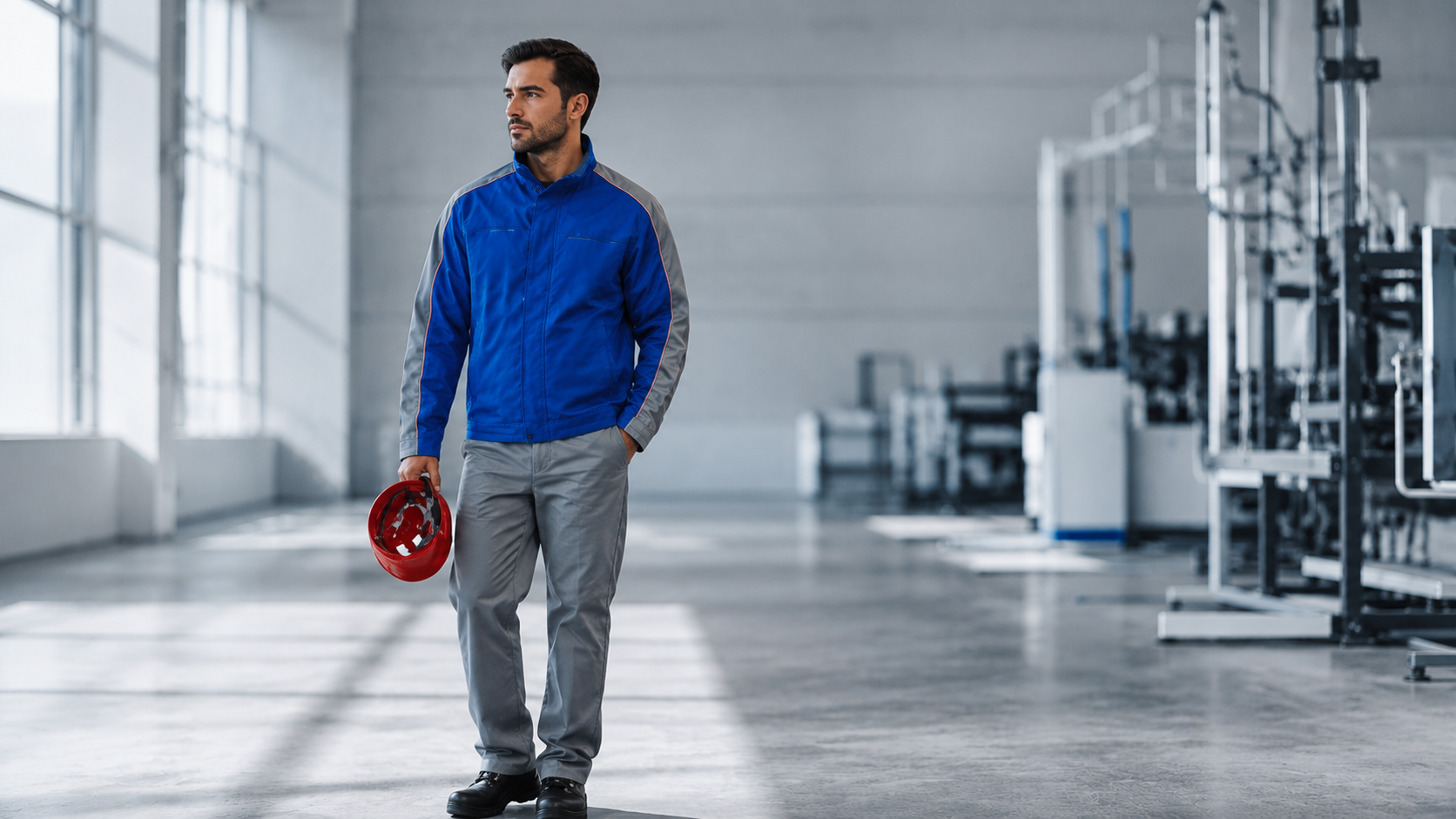
The Bardia arc flash workwear shown in the product image features a professional workwear design with blue and gray elements.
However, the appearance of a garment alone cannot establish its Arc Rating or certification.
For industrial purchasing, buyers should verify the manufacturer's technical documentation, fabric specifications, test results, declared standards and actual protection level.
This is especially important when the garment is being purchased for electrical work involving a defined arc-flash hazard.
What Should You Check Before Buying an Arc Flash Suit?
Before purchasing arc-rated workwear, check:
1. Applicable safety standards
2. Arc Rating
3. Fabric composition
4. Thermal and flame performance
5. Garment construction
6. Stitching and closures
7. Available sizes
8. Comfort and mobility
9. Care and washing instructions
10. Compatibility with the workplace risk assessment
Is Flame-Resistant Clothing the Same as Arc-Rated Clothing?
No.
Flame-resistant clothing and arc-rated clothing are related but should not automatically be treated as the same thing.
ISO 11612 specifies minimum performance requirements for protective clothing designed to protect the body against heat and flame.
Arc-flash protection is a more specific electrical hazard consideration, addressed by standards such as IEC 61482-2.
Therefore, if the primary hazard is an electrical arc flash, the garment should have verified arc-related performance rather than simply being labeled flame-resistant.
How Should Arc-Rated Clothing Be Maintained?
Follow the manufacturer's care instructions carefully.
Improper washing, unauthorized modifications, physical damage or deterioration can affect protective performance.
Inspect the garment regularly for damaged seams, closures, fabric deterioration and other visible problems.
Avoid unauthorized alterations that could change the original protective construction.
Frequently Asked Questions
What is an arc flash suit?
An arc flash suit is protective clothing designed to reduce exposure to the thermal effects of an electric arc.
Does an arc flash suit prevent electric shock?
Not necessarily. Arc-flash protection and electrical shock protection are different safety requirements. IEC 61482-2 does not address electric shock hazards.
What standard is used for arc-rated clothing?
IEC 61482-2 is a major international standard addressing protective clothing against the thermal hazards of electric arcs.
What is Arc Rating?
Arc Rating describes the thermal performance of a material or clothing system under a defined arc test.
Is flame-resistant clothing automatically arc-rated?
No. Flame resistance alone does not establish arc-flash performance.
Who needs arc-rated clothing?
Workers whose electrical tasks expose them to an arc-flash hazard may require arc-rated clothing, depending on the risk assessment and applicable safety requirements.
Conclusion
Arc flash suits and arc-rated clothing are specialized forms of electrical safety workwear designed for environments where workers may face thermal hazards from an electric arc.
Choosing the right garment requires more than looking at its appearance or fabric thickness.
The Arc Rating, applicable standards, fabric, garment construction, sizing and compatibility with the workplace risk assessment should all be considered.
For professional electrical environments, the best approach is to identify the actual hazard first and then select protective clothing with verified technical performance.
What is an arc flash suit? Learn about arc-rated clothing, IEC 61482-2, Arc Rating, protective fabrics and how to choose the right electrical safety workwear.
Write a Comment